Branding for a home service business is the combination of visual identity, voice, and proof that makes a homeowner pick you over the two other trucks they could call. It's not just the logo or the color palette — it's everything that consistently signals who you are and what you stand for, from the way the phone gets answered to the uniforms the techs wear to the photos on the website. Done well, branding moves three numbers on the P&L: cost-per-lead drops, close rate goes up, and average ticket increases. Done poorly or inconsistently, branding becomes design theater that costs money without changing the business. This post walks through what actually matters and what's usually wasted spend.
Most operators we talk to either underinvest in branding (treating it as a logo file) or overinvest at the wrong stage (commissioning a $30K identity system when they haven't fixed call answering or service-area pages yet). The right scope changes by tier, and the right content of the work — not just the budget — separates branding that compounds from branding that decorates. It's part of our Growth System, specifically the foundation that every other channel builds on.
What branding actually moves on the P&L
Operators who think branding is decorative haven't run the math on what consistent branding does to the financials. Three lines move when branding is right.
Cost-per-lead
A stronger brand earns better click-through rates on ads, higher organic CTR in search, and more direct traffic. All three compound into lower cost-per-lead across every channel. A homeowner who's seen your truck three times this month is more likely to click your ad when it appears, which improves your ad's quality score, which lowers your cost-per-click, which compounds into lower cost-per-lead. The chain is mechanical, and it pays back monthly. Search Engine Journal's coverage of brand signals and SEO performance covers the broader picture for how brand recognition feeds search performance.
Close rate
Customers who recognize your brand before the sales call close at a materially higher rate than cold leads — often 20–40% higher. Recognition shortcuts the trust-building step that otherwise has to happen on the call itself. Every touchpoint feeds this: the wrap on the truck, the uniform on the tech, the invoice, the email signature, the way reviews get responded to. Operators who run consistent branding across all those touchpoints have inbound leads who are most of the way to "yes" before the conversation starts.
Average ticket
Premium brands charge premium prices. If you want to move upmarket into higher-ticket jobs, commercial work, or maintenance plans with longer commitments, branding is what makes the price feel appropriate instead of overpriced. A homeowner pricing the same job from two operators will often pay 15–25% more for the one whose brand signals trust and quality. That delta is pure margin if the operating cost is the same.
Key Takeaway: Branding moves three numbers — cost-per-lead, close rate, average ticket. Operators who measure those three before and after a branding investment usually find the work pays for itself within 12 months. Operators who don't measure end up arguing about whether branding "works" instead of testing whether it's working for them.
What's actually worth investing in
Five categories that produce the lift, in roughly the order of leverage.
Logo and identity system
Done once, used everywhere. Vehicles, uniforms, site, signage, invoices, email templates, social profile photos. Consistency is the multiplier — the same identity applied across 12 touchpoints compounds far more than a beautiful identity applied to three. Most operators have a logo and stop there. The leverage is in the system: color palette, typography, photography direction, layout patterns. The system makes consistency executable; the logo alone doesn't.
Brand voice guidelines
Written so your content team, social manager, CSR team, and email writer all sound like the same company. Voice guidelines aren't a document for designers — they're a tool for everyone who writes anything that touches a customer. The CSR who answers the phone, the tech who texts a confirmation, the email that follows up after a job — all of those should read like the same business. Operators without voice guidelines end up with five different "voices" across five touchpoints, and that inconsistency reads as unprofessional even when each individual touch is fine.
Real photography library
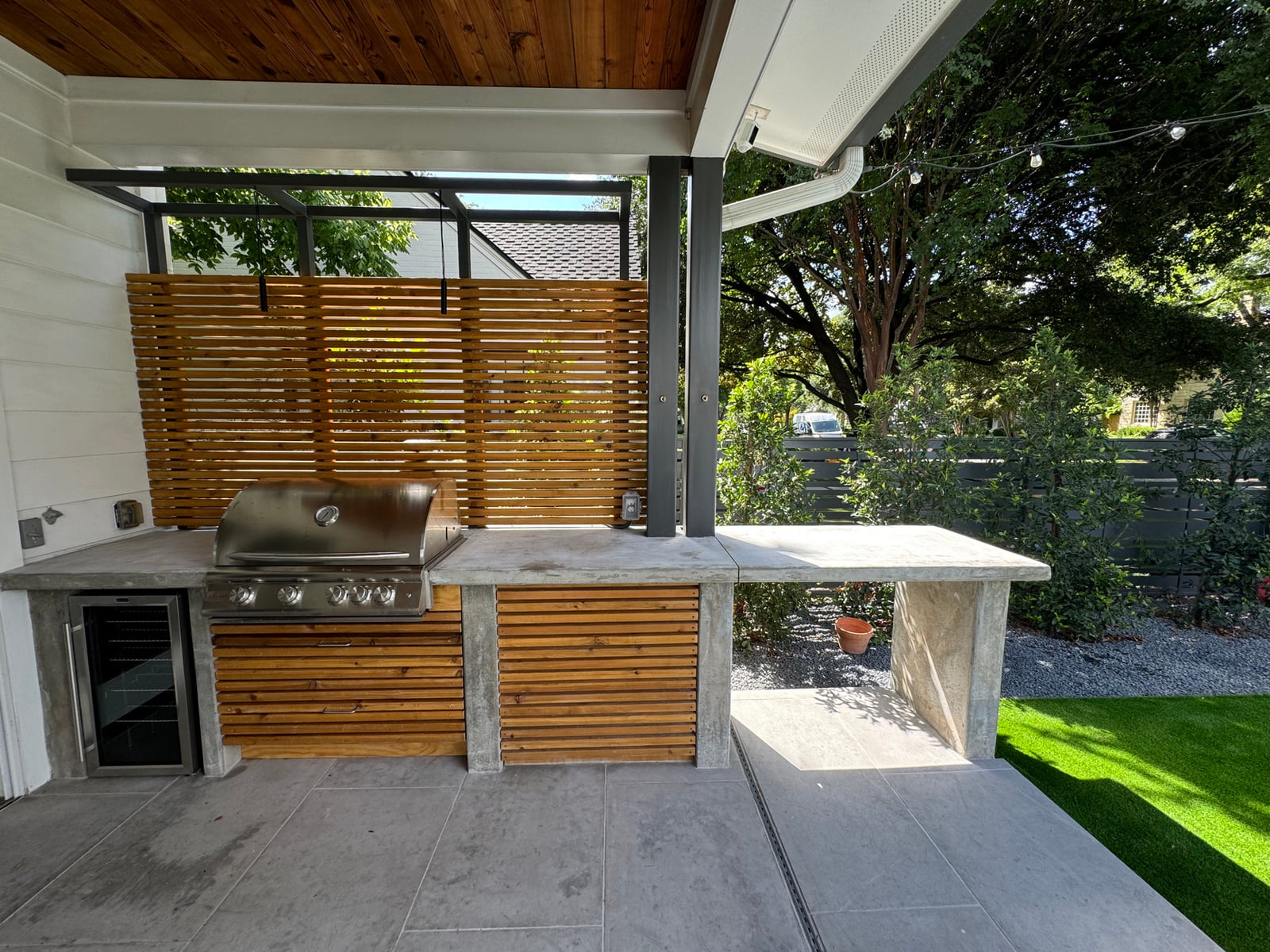
A library of real photos of your techs, trucks, completed work, and team. Stock photos kill premium positioning instantly — homeowners can spot stock imagery from a thumbnail and discount the brand accordingly. A one-day photography session producing 50–100 usable images for use across the website, social, ads, and email pays back for years. This is one of the highest-ROI single investments in home service branding because the library serves every other channel.
Vehicle wraps and uniforms
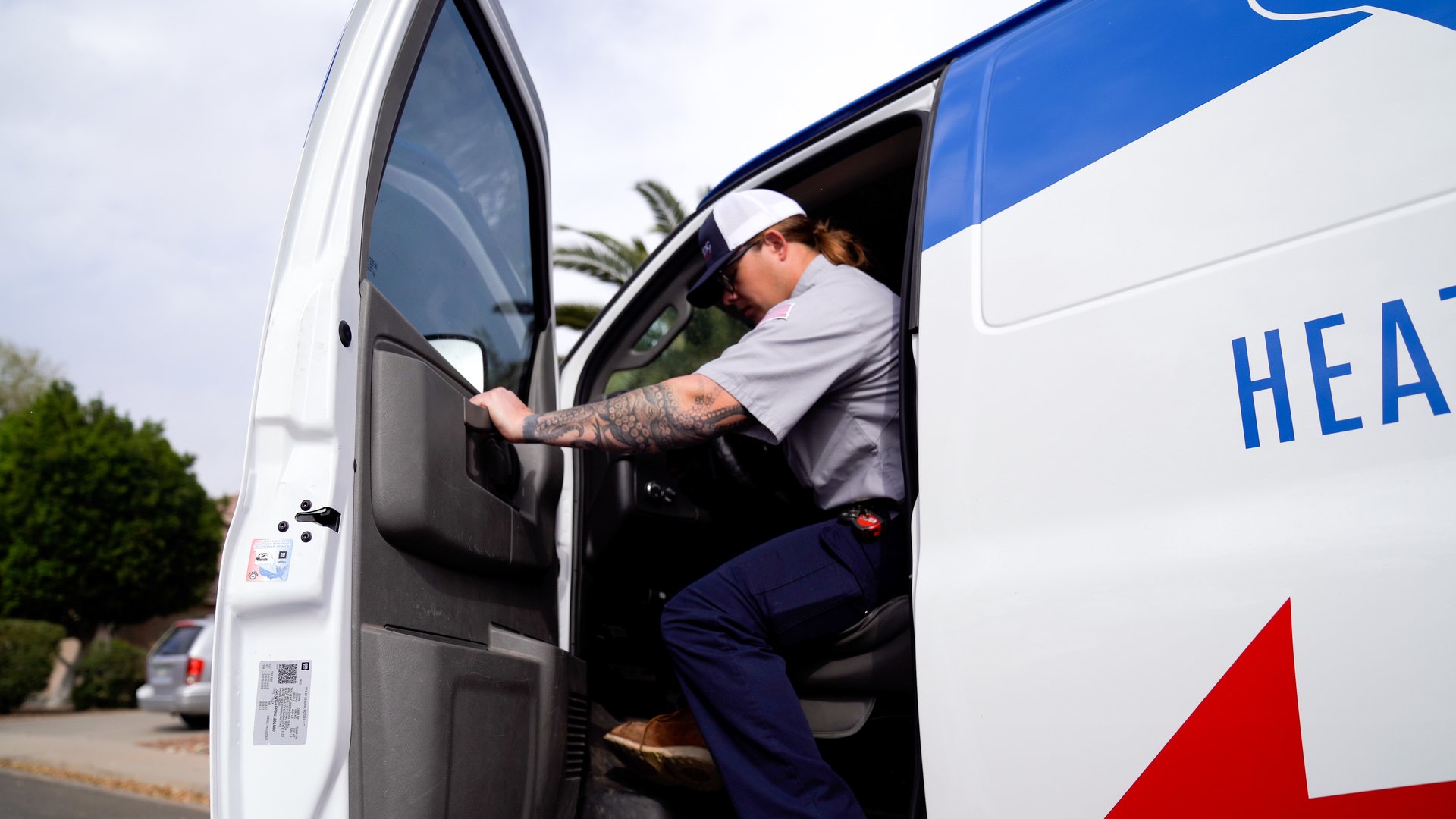
Rolling billboards. The single highest-ROI brand spend in home service. A wrapped truck visible in a service area generates impressions every day at marginal cost. Done well — clear logo, phone number readable from 30 feet, color scheme that stands out in the neighborhood — wraps build local recognition faster than any other channel. Uniforms compound the same effect. A branded shirt and a branded truck arriving at a job is a different brand experience than a plain truck and a t-shirt.
Customer experience standards
Less discussed but as important as visual identity. A written standard for how the phone is answered, how appointments are confirmed, how techs introduce themselves, how invoices are presented, how follow-up texts are written. The brand at the customer level is the experience, not the logo. Operators who write down their experience standards and train against them maintain brand consistency as they scale; operators who leave it implicit watch the brand fragment as soon as they hire the third or fourth person.
What's usually wasted money
Spending that produces little lift, in roughly the order of frequency.
- Rebrands without a business reason. New ownership, new positioning, M&A — fine. Chasing a fresher look — almost never worth the disruption to brand equity already built.
- Custom fonts that cost $800 a license and only appear on one page. Most operators don't need bespoke typography. Well-chosen Google Fonts deliver 95% of the impact at 5% of the cost.
- Generic stock imagery applied to industry-specific copy. The mismatch between specific words and generic imagery undermines the whole page. Real photos always outperform stock for trades.
- Brand guidelines documents that nobody on the team reads. A 60-page brand bible delivered as a static PDF is a deliverable, not a tool. Useful brand guidelines are 6–10 pages, accessible, and referenced weekly.
- Logo redesigns every two to three years. Brand equity compounds over time. Refreshing the logo every couple of years resets that compounding from zero each time. Real logos are designed to last decades, not seasons.
- Premium positioning without operational consistency to back it up. A premium-looking website paired with rushed CSR responses, scuffed trucks, and inconsistent follow-up is worse than mid-tier branding that's internally consistent. The brand is the worst-feeling touchpoint, not the best.
Any one of these can drain the branding budget. Stack two or three together and a branding investment produces a beautiful book of guidelines and zero P&L movement.
How branding scales by revenue tier
The right scope shifts at each stage.
$0–$500K. Clean logo, simple color palette, basic vehicle wrap, professional photography for the website. Budget: $3,000–$8,000 for the foundation. Don't commission strategy work yet — focus on execution-grade branding that looks professional and is consistent.
$500K–$2M. Full identity system: logo, color palette, typography, voice guidelines, photography direction, applied across all collateral. Budget: $8,000–$20,000. This is where investing in real branding starts paying back fastest because the business is at the stage where premium positioning unlocks higher-ticket work.
$2M–$5M. Identity system plus customer experience standards plus initial brand strategy work. Budget: $15,000–$35,000. The branding work expands beyond design into voice, experience, and operational consistency.
$5M+. Brand strategy, multi-service-line architecture, sub-brands where appropriate (residential vs. commercial), formal brand governance. Budget scales with complexity. The work shifts from creating identity to managing it as the business operates across markets and divisions.
The mistake we see most often is operators at $1.5M still running the visual identity from when they were $250K. The branding that got you here usually caps you at the next tier.
Key Takeaway: Different tier, different scope. Under $500K, get the foundation right. $500K–$2M, build the full system. $2M+, expand into experience and strategy. Spending one tier above stage produces beautiful identity for a business that can't operationalize it; spending one tier below caps the kinds of customers the brand can attract.
How branding fits the rest of the Growth System
Branding isn't a standalone ASP service. It's baked into every Growth System tier because it touches every other channel. A rebrand inside the Growth or Premier tier is quoted based on scope — logo refresh, full identity system, or full brand repositioning. For operators who just want identity work without the full system, we still take project-based branding engagements. Reach out and we'll scope it.
The integration matters because branding is the foundation other channels build on. A great website that converts without consistent branding underperforms; branding without execution channels never gets seen. The combination is what compounds — branding gives every other channel something coherent to amplify, and every other channel gives branding the volume that turns identity into recognition.
Common questions
What is branding for a home service business?
The combination of visual identity, voice, and proof that makes a homeowner pick you over the next truck. Logo, colors, typography, photography, voice, customer experience — all working consistently together.
Does branding actually affect revenue for home service businesses?
Yes, on three lines: cost-per-lead drops, close rate goes up, average ticket increases. Compounds to meaningful lift within a year when measured.
What are the most important elements of a home service brand?
Logo and identity system, voice guidelines, real photography library, vehicle wraps and uniforms, customer experience standards. Consistency is the multiplier.
When should a home service business invest in branding?
At startup, during a positioning shift, or when current branding actively contradicts the business. Not when chasing trends.
How much does branding cost for a home service business?
Logo refresh: $3K–$8K. Full identity system: $12K–$30K. Strategy and repositioning: $25K+. Vehicle wraps: $3K–$7K per truck.
Is branding worth investing in if I'm under $1M in revenue?
Yes, at smaller scope. Clean execution-grade identity is worth $5K. Full strategy work is usually premature.
Should I rebrand my home service business?
Usually no. Rebrand only with a clear business trigger. Aesthetic refreshes sacrifice equity already built.
Conclusion
Branding for home service businesses is misunderstood twice — once by operators who treat it as a logo file, and once by operators who overinvest in strategy work before they've fixed operational consistency. The truth is that branding is the foundation every other channel builds on, and the leverage comes from consistency across touchpoints, not from any single deliverable. Operators who invest at the right scope for their tier and operationalize the work see compounding returns on cost-per-lead, close rate, and average ticket. Operators who treat branding as decoration produce a beautiful identity for a business that doesn't capture any of the lift.
If you want to see whether your current branding is working for the business you've built, run the Growth Diagnostic or contact ASP to walk through where the brand is helping and where it's holding the business back. No decks, no pressure — just a working session on what's worth investing in next.
Frequently Asked Questions
What is branding for a home service business?
Does branding actually affect revenue for home service businesses?
What are the most important elements of a home service brand?
When should a home service business invest in branding?
How much does branding cost for a home service business?
Is branding worth investing in if I'm under $1M in revenue?
Should I rebrand my home service business?

Joel Keith
Founder & CEO, ASP
Joel Keith is the founder and CEO of ASP, a growth-systems marketing agency for home service operators. He built and sold his first marketing agency in under two years — a run that taught him the hard way about concentration risk, service fulfillment, and the systems most operators never build. He started ASP to fix what he saw breaking in home service marketing. ASP is an Official Housecall Pro Affiliate Partner.
Ready to Put This Into Action?
ASP can help you implement these strategies and build a marketing system that drives measurable growth.