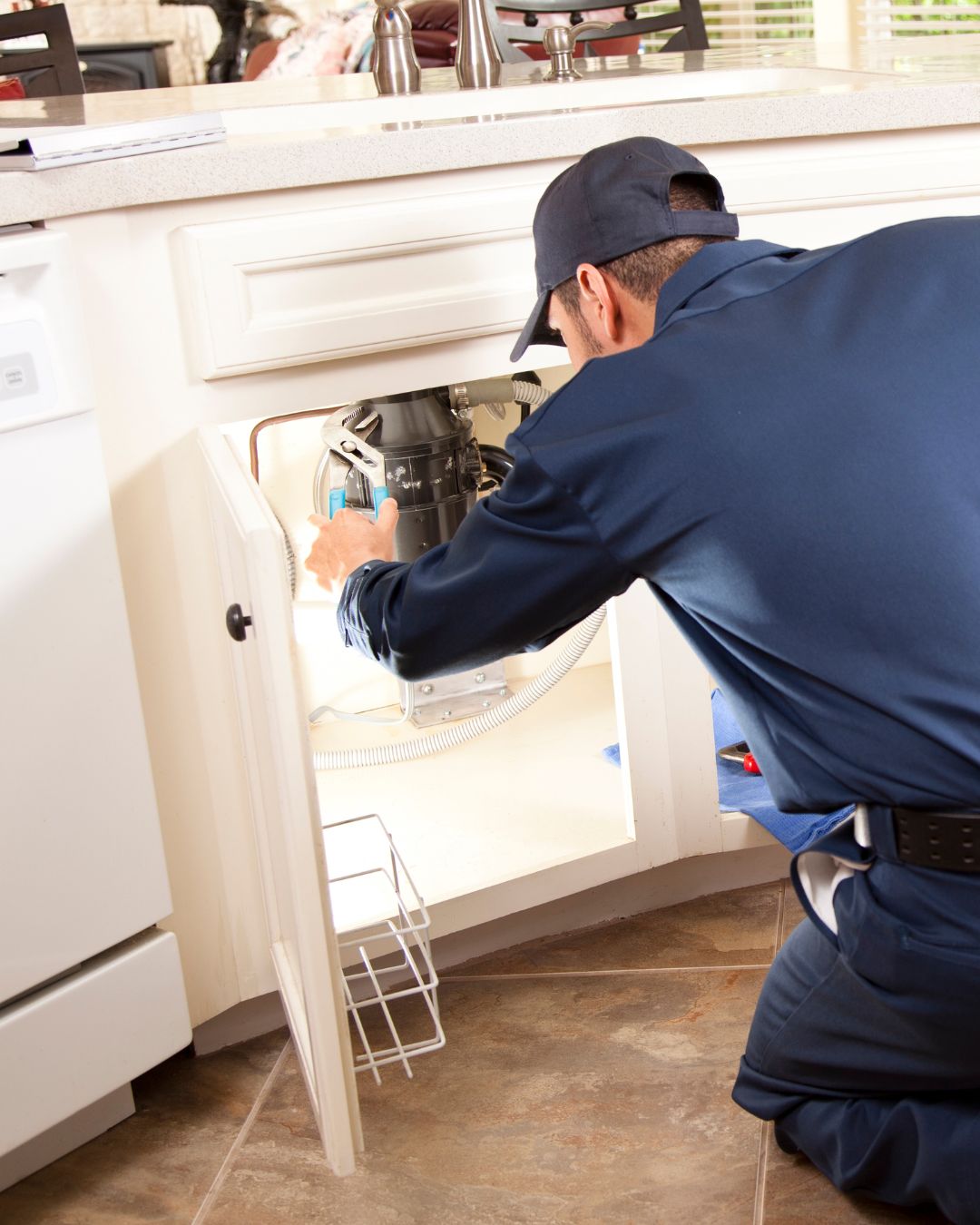
Local SEO for a home service business is the work that puts you in front of a nearby homeowner the moment they search for what you do. It runs on four connected pieces: your Google Business Profile, your citations across the web, on-site signals like service-area pages and schema markup, and reviews. When all four work together, you show up in the local map pack — the three-result block above regular search results — for the searches that actually book jobs. When even one is broken, a competitor with cleaner signals takes the booking instead. This post walks through each pillar, the mistakes most operators make, and what to invest in by revenue tier.
Most home service businesses don't have a marketing problem. They have a visibility problem. When a homeowner types "HVAC repair near me" or asks Google "who should I call for a clogged drain in Phoenix," your business either shows up in the first three results — or it doesn't. The four pillars below are how you make sure you do, in every zip code your trucks already drive. It's the Local SEO component of our Growth System, explained the way we'd walk through it in a working session with an operator.
What local SEO actually means for a home service business
Local SEO is the system that wins you the local map pack, the call button on a phone, and the organic rankings below the pack — across every service area you operate in. It's a different discipline from general SEO because the buyer's intent is different. A homeowner searching "tankless water heater installation Austin" is not browsing. They are 24 to 72 hours from booking someone, and the only question is whether that someone is you.
Google decides who shows up by weighing three big factors: relevance (does your business match what the searcher needs), distance (how close are you to the searcher's location), and prominence (how strong is the rest of your local presence — reviews, citations, web authority). Each of the four pillars below feeds at least one of those three factors. None of them alone is enough.
Key Takeaway: Local SEO is not one tactic. It's four pillars working together — GBP, citations, on-site signals, and reviews — that prove to Google your business is the right answer for a nearby homeowner's search.
The four pillars of local SEO for home service operators
1. Google Business Profile optimization
Your Google Business Profile is the listing that shows up in the map pack and on Google Maps. It's the most valuable single piece of real estate in home service marketing because it includes the call button, the directions button, and the reviews — all in one tap on a homeowner's phone.
Every field on the profile signals something to Google. Your primary category (e.g., "HVAC contractor") sets the searches you can show up for. Your service list tells Google which jobs you actually do. Your service area defines the zip codes you can rank in. Hours, photos, and Q&A all influence engagement signals. Most operators claim the profile, fill it out once, and never touch it again. That's the gap. A profile that gets weekly posts, fresh photos, and active Q&A consistently outperforms a static profile with the same review count. Google's own help documentation on Business Profile optimization covers the field-by-field specifics.
2. Citations and NAP consistency
NAP stands for name, address, and phone. Citations are listings of your NAP info on directories, aggregators, and niche industry sites — Yelp, Yellow Pages, BBB, Angi, your trade association, your local chamber. Google uses citations to confirm you're a real business at the address you claim, and inconsistencies create doubt the algorithm doesn't reward.
The fix is simple in concept and tedious in practice: pick one canonical version of your NAP — exact spelling, exact suite designation, exact phone format — and make sure every listing across the web matches it. A clean citation profile takes 60 to 90 days to build out and pays off for years. We dig deeper into this in our piece on why consistent NAP info matters for local SEO.
3. On-site local signals
Your website is what corroborates everything your GBP says. Service-area pages prove you actually serve the cities your profile lists. Service pages with schema markup prove you do the specific jobs your profile claims. Internal linking between service-area and service pages tells Google how your offerings connect. LocalBusiness schema on the homepage, with the same NAP info as your GBP and citations, is the explicit signal Google looks for to tie everything together.
The mistake most operators make is having one "Service Areas" page with 50 city names listed. That ranks for nothing. The pattern that works is one real page per service area — original copy, local landmarks or context, embedded map, testimonials from that city when possible. It takes more work, and it's the work that actually earns rankings.
4. Reviews and reputation
Reviews influence local rankings on three axes: count, velocity, and content. A business with 60 reviews averaging 4.8 stars and one fresh review a week beats a competitor with 200 reviews from three years ago every time. The reviews also need keywords — when a customer naturally writes "the technician fixed our gas leak fast," that's a ranking signal for "gas leak repair" in your service area.
Responding to every review matters, too — both positive and negative. A consistent response rate signals an active business. A clean response to a negative review signals professionalism, both to Google and to the next homeowner reading the profile. The operators who win locally treat reviews as an ongoing operational discipline, not a one-time push.
Key Takeaway: GBP wins the map pack. Citations confirm you're real. On-site signals prove you serve the area. Reviews compound everything. Skip any one and the others underperform.
How the four pillars work together
The mistake we see constantly is operators who pour all their effort into one pillar — usually GBP — and ignore the others. A great profile with thin citations and no service-area pages can rank in low-competition metros. In any competitive metro, it loses to operators whose four pillars are all in shape.
The leverage is in the integration. Citations confirm what GBP claims. On-site service-area pages support both. Reviews on GBP corroborate on-site testimonials. Each pillar makes the others stronger. That's why a hybrid investment — modest budget across all four — outperforms a heavy investment in one pillar with the others left bare. Search Engine Journal's local SEO guide is a good ongoing read for the latest weighting Google uses.
Common mistakes home service operators make with local SEO
A handful of patterns we see almost weekly:
- Setting up GBP once and walking away. No fresh photos, no posts, no Q&A engagement. The profile decays.
- Using a tracking phone number as the canonical NAP. Tracking numbers are great for attribution, but the canonical NAP across GBP and citations should be your main business line.
- Stuffing the GBP business name with keywords. "ABC Heating, Air Conditioning, and HVAC Repair Phoenix" violates Google's guidelines and can earn a profile suspension.
- One service-area page listing 50 cities. Ranks for nothing. One page per real service area is the pattern that earns rankings.
- No review request system. Asking happy customers for a review needs to be a reliable post-job step, not a sporadic ask.
- Ignoring negative reviews. A measured, professional response signals an active operator. Silence signals indifference.
Any one of these can cap your local visibility on its own. Two or three together usually explain why a competent operator is invisible in a metro they should own.
What to invest in by revenue tier
Local SEO investment scales with where the business is, not with how much you wish it would scale.
$0–$300K. GBP first, period. Claim the profile, verify the address, get to 25 genuine reviews, post weekly. Add a basic NAP listing on the top 10 directories. Don't spend on a custom site yet — a one-page site with a phone number and service list is enough. The map pack is doing the lifting.
$300K–$1M. Now add the website. A real site with service pages, service-area pages, and LocalBusiness schema. Build out citations on industry-specific directories beyond the big aggregators. Set up a review request system tied to job completion in your CRM. This is the tier where investing in the full four pillars compounds the fastest. Our Local SEO Pro productized service covers exactly this scope. If you're weighing whether to hire an agency for it, our guide on how to choose the right SEO agency covers the red flags to watch.
$1M–$3M. Multiple service areas, multiple service lines. The on-site signals expand — one service-area page per real city, schema on every page, internal linking that maps your offerings to your geography. Review velocity needs to scale with job volume. Pair local SEO with a working marketing attribution system so you can see which pillars are producing booked revenue, not just rankings.
$3M+. The local SEO function is now an operational discipline, not a project. A coordinator owns GBP weekly, a content function builds out service-area depth, and review management is automated post-job. Local SEO at this tier is about systems and consistency, not new tactics.
Key Takeaway: Different tier, different priority. Under $300K, GBP is the workhorse. $300K–$1M, build the full four pillars. Past $1M, the work shifts from setup to systems.
How local SEO fits into the Growth System
Local SEO is one component of the ASP Growth System. It runs alongside paid media, content, follow-up automation, and the Housecall Pro integration layer — so every click from the map pack becomes a tracked, attributable job inside your CRM, not a cost-per-click report. The Local SEO and paid media pillars also feed each other directly: a strong GBP improves Local Services Ads performance, and a tight site with schema improves Quality Score on Google Ads. Our piece on Google Business Profile vs. website investment priority covers how the two surfaces compound when run together.
Want the fast version? Run the Growth Diagnostic and we'll tell you which tier of the system fits your business today, and which of the four local SEO pillars is the weakest link in your current setup.
Common questions
What is local SEO for a home service business?
Local SEO is the system that gets a home service business to show up when a nearby homeowner searches for what you do. It runs on four pieces — Google Business Profile, citations, on-site signals, and reviews. When the four work together, you win the local map pack and the calls that come from it.
How long does local SEO take to work for a contractor?
Most operators see meaningful movement in 60 to 90 days, assuming the foundation work is happening — GBP fully optimized, citations cleaned up, review request system live. Full compounding takes about six months.
Is Google Business Profile enough for local SEO?
For a brand-new operator under $300K, GBP alone can produce bookable work. Past that point, you hit a ceiling without citations, on-site service-area pages, and review velocity backing it up.
What are NAP citations and why do they matter?
NAP stands for name, address, phone. Citations are listings of your NAP across directories. Google cross-checks them to confirm you're a real business at the address you claim. Inconsistencies drag your rankings — fix them once and the gain holds for years.
How do reviews affect local SEO rankings?
Three ways: total count, how often new ones come in, and the keywords customers naturally use. A profile with steady review velocity beats one with a bigger but stale review count almost every time.
Do I need a website for local SEO to work?
Yes, in nearly every case. A linked website with LocalBusiness schema and service-area pages corroborates everything on your GBP and lets you rank organically below the map pack.
What's the difference between local SEO and regular SEO?
Regular SEO competes for searches without a location component. Local SEO competes for searches with location intent — almost every commercial search a home service business needs to rank for. Local is the higher-leverage discipline for trades.
Conclusion
Local SEO is not one tactic. It's four pillars — GBP, citations, on-site signals, and reviews — that work together to put you in front of a nearby homeowner the moment they search. Operators who invest in all four compound their visibility every quarter. Operators who pour effort into one pillar and ignore the rest get capped early and stay capped.
If you want to see which of the four pillars is the weakest link in your current setup, run the Growth Diagnostic or contact ASP to walk through the Local SEO component of our Growth System. No decks, no pressure — just a working session on what's working, what isn't, and what would move the needle next quarter.
Frequently Asked Questions
What is local SEO for a home service business?
How long does local SEO take to work for a contractor?
Is Google Business Profile enough for local SEO?
What are NAP citations and why do they matter?
How do reviews affect local SEO rankings?
Do I need a website for local SEO to work?
What's the difference between local SEO and regular SEO?

Joel Keith
Founder & CEO, ASP
Joel Keith is the founder and CEO of ASP, a growth-systems marketing agency for home service operators. He built and sold his first marketing agency in under two years — a run that taught him the hard way about concentration risk, service fulfillment, and the systems most operators never build. He started ASP to fix what he saw breaking in home service marketing. ASP is an Official Housecall Pro Affiliate Partner.
Ready to Put This Into Action?
ASP can help you implement these strategies and build a marketing system that drives measurable growth.